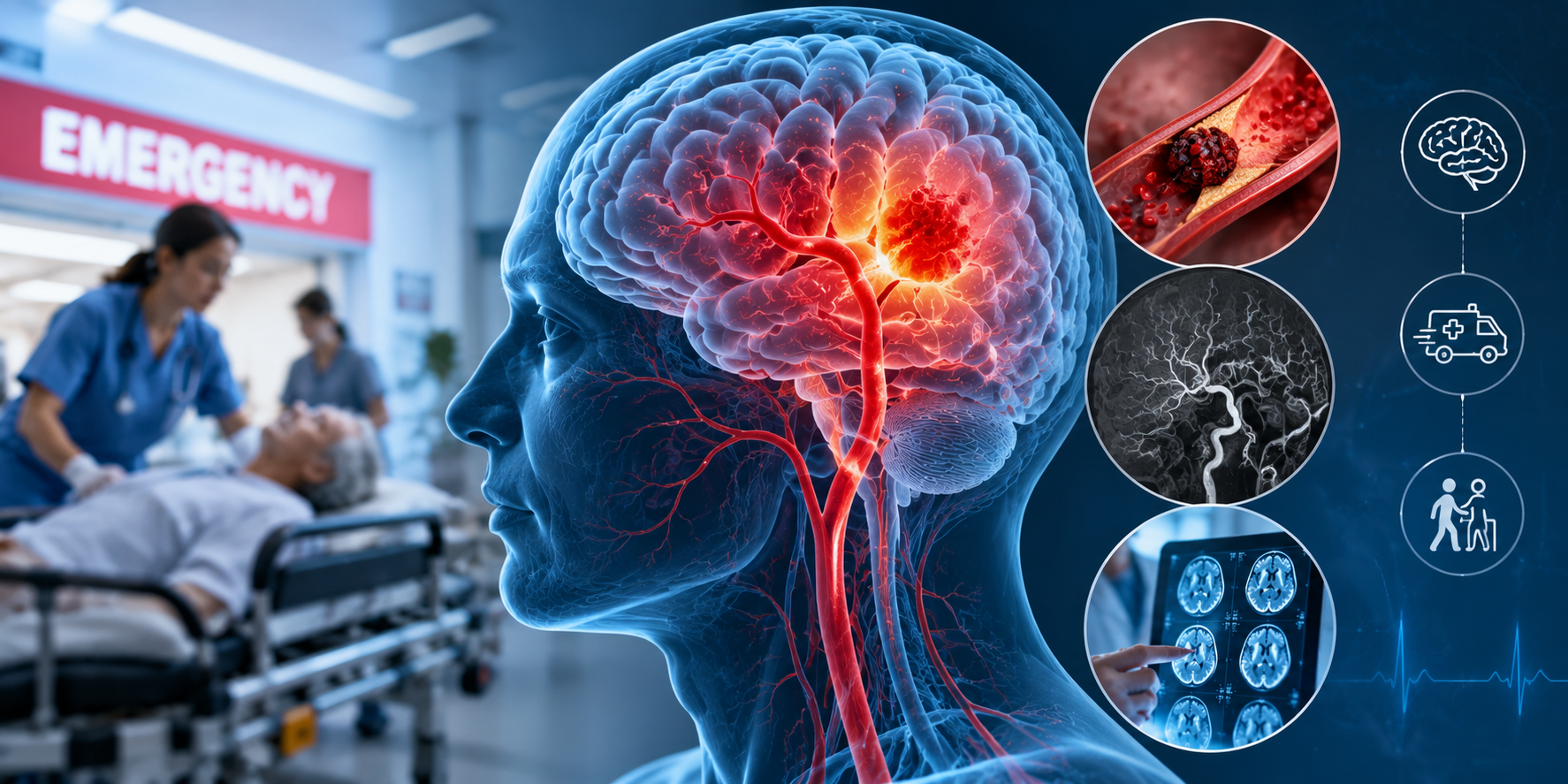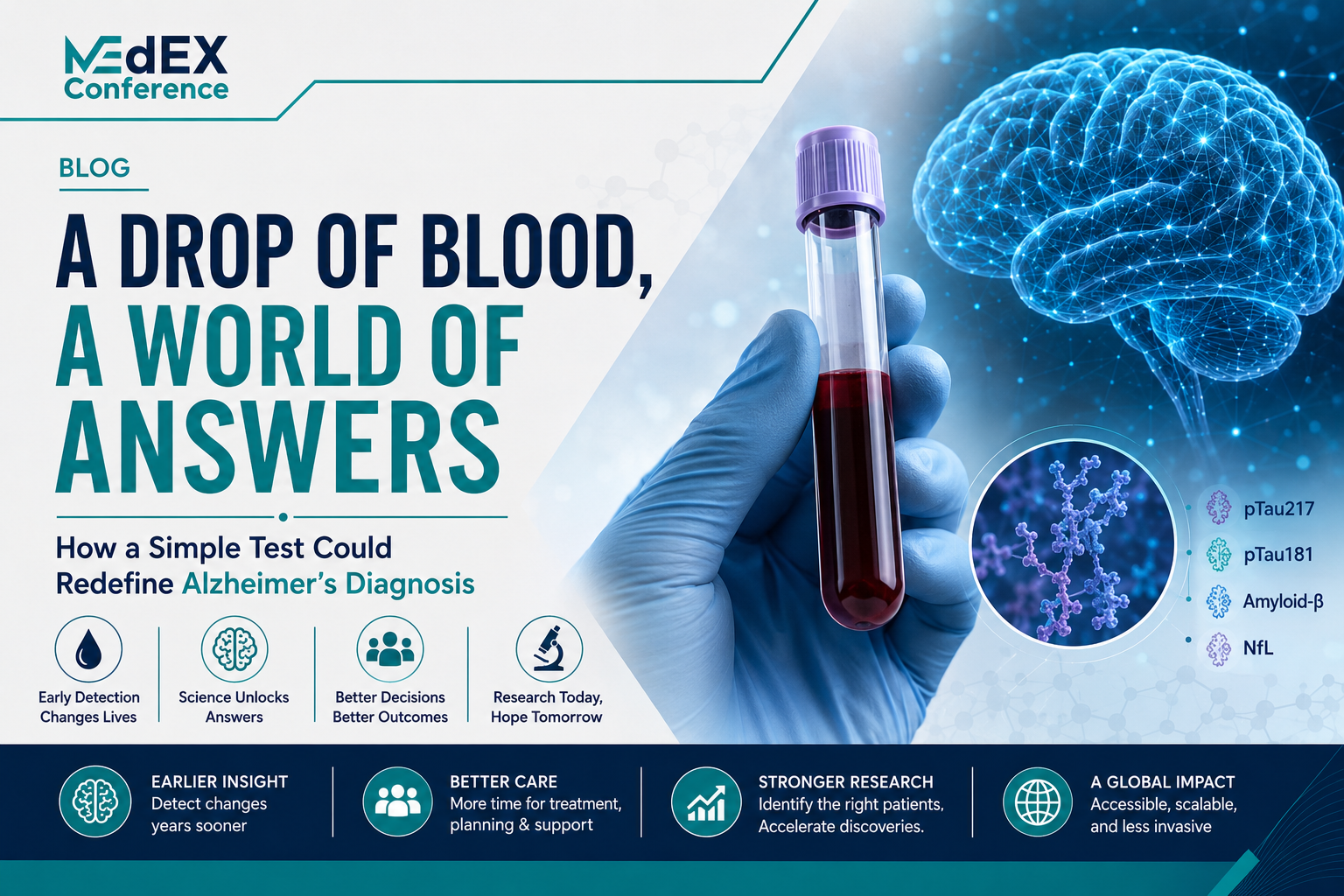
"The future of Alzheimer's diagnosis may not begin inside an MRI scanner-it may begin with a routine blood draw." For decades, Alzheimer's disease has challenged scientists in one fundamental way: by the time the diagnosis is confirmed, much of the damage has already occurred. Unlike many other diseases, Alzheimer's develops quietly. The biological changes inside the brain often begin years, sometimes decades, before memory loss becomes noticeable. During this silent phase, abnormal proteins gradually accumulate, nerve cells begin to deteriorate, and communication between brain regions slowly weakens. Yet patients continue with their daily lives, unaware that the disease has already begun. This delay has long limited opportunities for early intervention. Now, researchers believe they may finally have a way to change that. Across laboratories in North America, Europe, and Asia, scientists are developing blood-based biomarkers capable of detecting Alzheimer's-associated changes without relying solely on expensive brain scans or invasive spinal fluid tests. Instead of searching directly inside the brain, these tests measure tiny proteins circulating in the bloodstream that mirror ongoing neurological changes. Among the most promising biomarkers are phosphorylated tau (pTau217 and pTau181), amyloid-beta protein ratios, and neurofilament light chain (NfL). Together, these biomarkers provide valuable clues about processes occurring deep within the brain. The concept is remarkably simple. One blood sample. Thousands of protein molecules. Potentially years of earlier insight. More than 55 million people worldwide currently live with dementia, with Alzheimer's disease responsible for the majority of cases. As populations continue to age, this number is projected to increase significantly over the coming decades. While treatments capable of slowing disease progression are beginning to emerge, their greatest benefit appears during the earliest stages of disease. The challenge has always been identifying patients before irreversible neuronal damage occurs. Earlier diagnosis doesn't simply provide answers, it creates opportunities. Patients can participate in clinical trials, physicians can monitor disease progression more effectively, families can make informed healthcare decisions, and researchers gain valuable opportunities to evaluate emerging therapies before symptoms become severe. Blood-based diagnostics have moved far beyond experimental concepts. In recent years, regulatory agencies have begun clearing the first blood-based Alzheimer's diagnostic tests, while biotechnology companies continue refining biomarker technology for broader clinical use. At the same time, collaborations between diagnostic innovators and global healthcare companies are accelerating efforts to make these tests available through routine hospital laboratories rather than specialized research centers. This marks an important transition. The conversation is no longer whether blood biomarkers work. It is increasingly about how they can be integrated safely, accurately, and equitably into healthcare systems worldwide. The brain and bloodstream are more connected than once believed. As Alzheimer's disease progresses, damaged neurons release specific proteins that eventually become measurable in blood. Among these, phosphorylated tau 217 (pTau217) has attracted considerable attention because studies consistently demonstrate strong correlation with amyloid pathology detected through PET imaging. Other biomarkers—including pTau181, neurofilament light chain, and amyloid-beta ratios—provide complementary information, allowing clinicians to build a more complete biological picture of disease progression. Rather than replacing clinical evaluation, these biomarkers are expected to strengthen diagnostic confidence and help determine which patients require additional neurological assessment. Scientific breakthroughs rarely move directly from laboratory discovery to routine medical practice. Several important questions remain. Researchers continue validating biomarker performance across different ethnic populations, healthcare systems, and stages of disease. International standardization of laboratory methods is still evolving, and clinicians emphasize that blood biomarkers should be interpreted alongside cognitive assessment, medical history, and imaging findings whenever appropriate. In other words, this is not a replacement for clinical judgement. It is another powerful tool. Neurology is entering one of its most exciting periods in modern medicine. Artificial intelligence is improving medical imaging. Genomic technologies are advancing precision medicine. Disease-modifying therapies are changing treatment strategies. Blood-based biomarkers now have the potential to connect all of these innovations by enabling earlier, faster, and more accessible diagnosis. For patients, this could mean more time. For clinicians, better decision-making. For researchers, stronger clinical trials. And for healthcare systems worldwide, a future where detecting Alzheimer's becomes simpler, more scalable, and far less invasive than ever before. Sometimes, the biggest breakthroughs arrive not with dramatic new machines—but with the smallest sample imaginable. A single tube of blood. Blood-based biomarkers are transforming Alzheimer's research and diagnosis. Proteins such as pTau217, pTau181, amyloid-beta, and NfL are leading candidates for early detection. Earlier diagnosis could improve access to treatment, clinical trials, and long-term care planning. Blood tests complement—not replace—clinical evaluation and neuroimaging. Continued international research will determine how these technologies become part of routine neurological care. About Medex Conferences Medex Conferences is committed to sharing evidence-based medical insights, emerging clinical research, and global scientific developments that connect healthcare professionals, researchers, and innovators across the neurological sciences. References Reuters – ALZpath and Abbott partnership for blood-based Alzheimer's testing FDA clearance of the first blood test for Alzheimer's disease (Reuters coverage) NIH / PubMed Central – Blood-Based Biomarkers for Alzheimer DiseaseA Shift That Could Change Neurology
Why This Matters More Than Ever
From Research Laboratories to Clinical Practice
The Science Behind the Test
Challenges That Still Remain
Looking Ahead
Key Takeaways