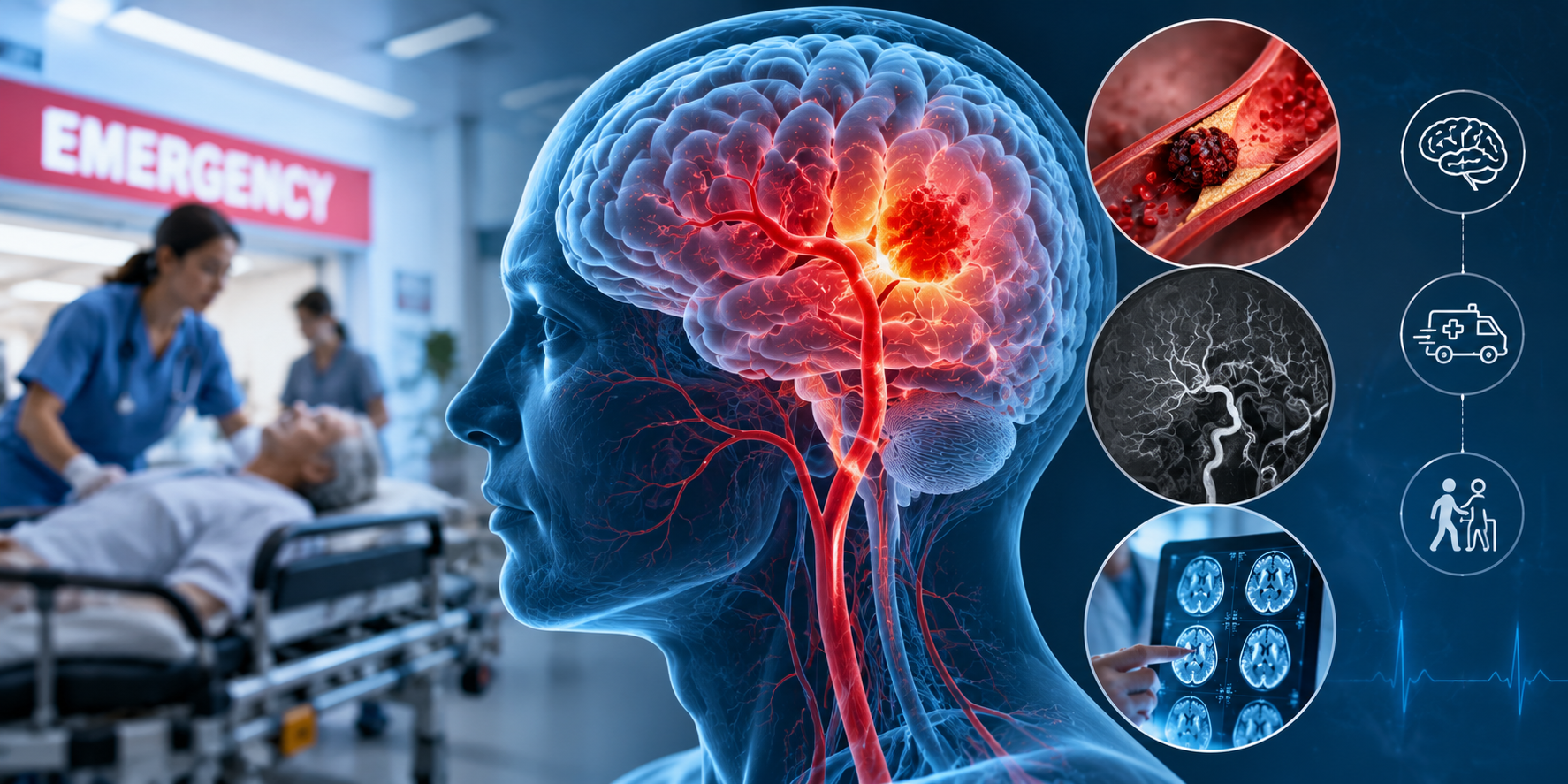
A stroke can change a person's life within minutes. Suddenly losing the ability to speak, move an arm, see clearly, or maintain balance can be frightening for both the patient and their family. Behind these sudden symptoms is often a disruption of blood flow to the brain, making rapid recognition and treatment essential. Stroke and other cerebrovascular disorders remain a major focus of neurological research because outcomes can depend heavily on how quickly the right treatment is delivered. At the same time, advances in imaging, thrombectomy, thrombolytic therapy, artificial intelligence, and stroke-care systems are changing how these emergencies are managed. Stroke is not a single condition. Ischemic stroke occurs when a blood vessel supplying the brain becomes blocked, while hemorrhagic stroke occurs when a blood vessel ruptures and causes bleeding in or around the brain. Transient ischemic attacks (TIAs), sometimes called “mini-strokes,” are another important warning. Although symptoms may resolve, they can indicate an increased risk of a future stroke and require appropriate medical evaluation. Recognizing these differences is essential because treatment decisions depend on the underlying cause. One of the most important developments in stroke care has been the expansion of treatments that can restore blood flow to the brain. Intravenous thrombolysis remains an important treatment for eligible patients with acute ischemic stroke, and the latest American Heart Association/American Stroke Association guideline recognizes both alteplase and tenecteplase as options within the established treatment window. Selected patients may also qualify for treatment beyond the conventional time window when advanced imaging identifies potentially salvageable brain tissue. This reflects a broader shift in stroke medicine: rather than relying only on the clock, clinicians can increasingly use the condition of brain tissue to help guide treatment in selected patients. Endovascular thrombectomy has transformed treatment for certain patients with large-vessel ischemic stroke. During the procedure, specialists use a catheter to reach the blocked blood vessel and remove the clot, restoring blood flow to the brain. Recent evidence has expanded the group of patients who may benefit from thrombectomy, including selected patients with larger areas of established brain injury and certain patients with basilar artery occlusion. These developments highlight the importance of rapid imaging, specialist coordination, and efficient stroke pathways. Advanced CT and MRI techniques can help clinicians identify blocked vessels, assess brain tissue, and determine whether potentially salvageable tissue remains. Artificial intelligence is also increasingly being explored to assist with image interpretation and communication of suspected large-vessel occlusion. The goal is not to replace clinical expertise, but to help teams identify important findings quickly and coordinate treatment. Mobile stroke units are another development receiving attention. By bringing specialized assessment and treatment closer to the patient, they may help reduce delays before hospital-based care. Stroke care does not end when the blocked vessel is treated. Recovery can involve rehabilitation for movement, speech, swallowing, cognition, and daily activities. Preventing another stroke is equally important and may involve addressing factors such as hypertension, diabetes, atrial fibrillation, smoking, and other vascular risks. The future of cerebrovascular care will increasingly depend on combining rapid diagnosis, advanced treatment, personalized decision-making, rehabilitation, and long-term prevention. Medex Conferences supports the exchange of medical research and scientific knowledge by bringing attention to emerging developments across healthcare. Its platforms encourage clinicians, researchers, academicians, and healthcare professionals to share knowledge and explore evolving approaches to patient care.Understanding the Different Faces of Stroke
The Race Against Time
The Expanding Role of Thrombectomy
Technology Is Reshaping Stroke Care
Looking Beyond the Emergency
About Medex Conferences